

DECEMBER 18, 2025
Since 2019, we have executed the first prong of our mission—supporting workforce education—through our Metallica Scholars Initiative. This year, AWMH funded programs in 75 community colleges across all 50 United States, plus Guam, with a $3 million grant. Throughout the lifetime of this partnership with the American Association of Community Colleges (AACC), we've invested a total of $15.3 million in grants to support more than 13,000 students.
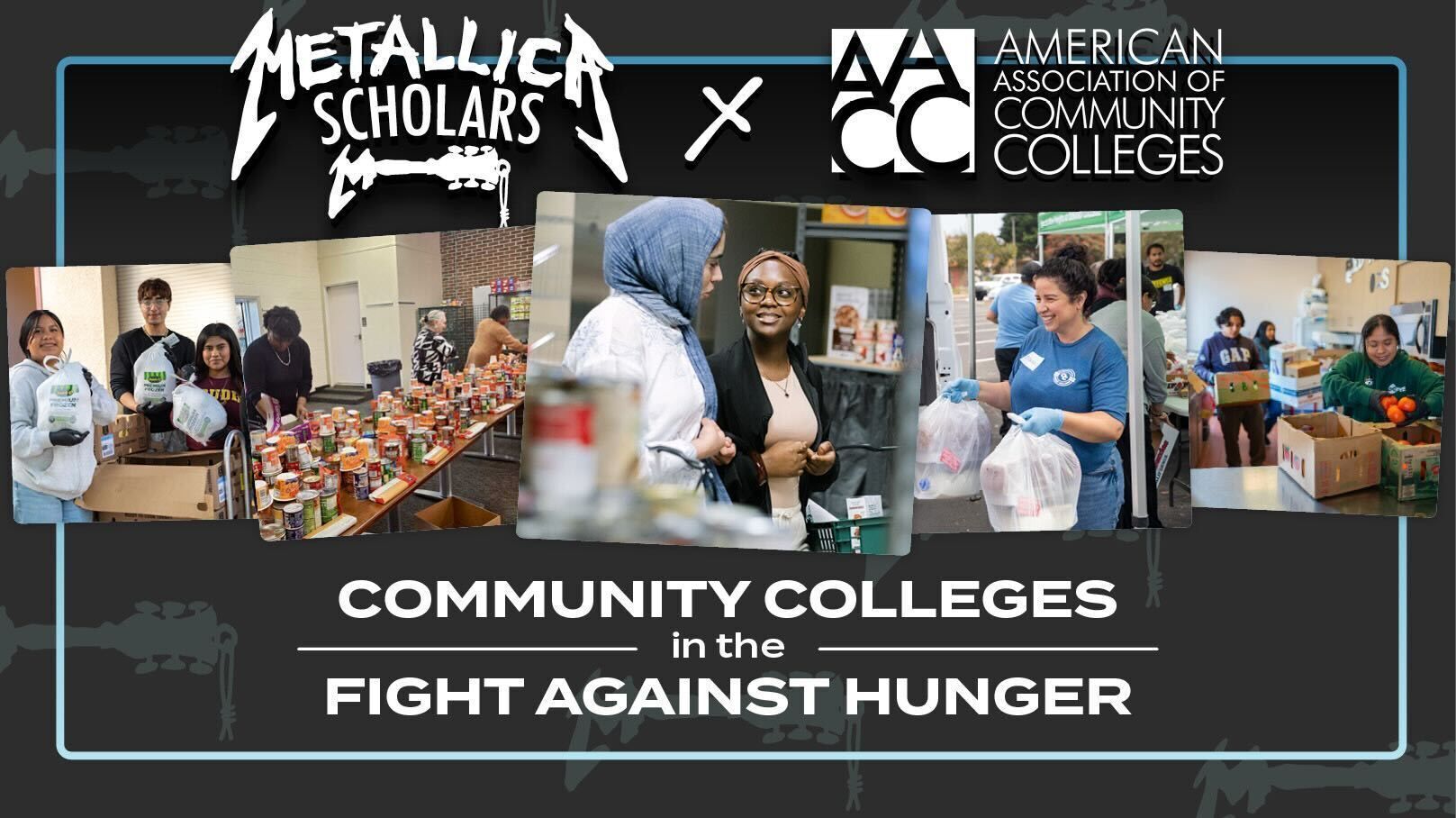
Recently, the Foundation learned that many of our workforce education grant recipients are also at the forefront of the fight against hunger, the second pillar of our mission. During the holiday season, we have been spotlighting several of our partner colleges beyond their workforce programs. More than a third of the Metallica Scholars-affiliated campuses are actively battling food insecurity within their communities.
The common objective expressed by each school was to empower students to thrive by ensuring they could focus on their studies. Alleviating the additional financial struggle and stress associated with food and resource insecurity makes staying on track with education and goals more feasible. To promote both individual and communal success, campuses across the country are providing vital resources that meet essential needs and nutritional requirements with respect, discretion, consistency, and dignity. By offering such support, these schools demonstrate a care for the entire person that extends beyond education.
All Within My Hands is proud to share how these Metallica Scholars-affiliated campuses are investing in support for their communities.
AIKEN TECHNICAL COLLEGE
The Knights Corner Food Pantry is a vital resource dedicated to supporting ATC’s campus community by addressing food insecurity among students. The pantry provides free, nutritious food options to ensure every Knight has access to the essentials they need to thrive academically and personally. Stocked with a variety of items, including non-perishable goods, grab-and-go snacks, ready-to-eat meals, and hygiene products, the pantry is a welcoming, judgment-free environment designed to foster dignity and care. Since opening in Fall 2024, the pantry has served approximately 980 individuals, making a significant impact on student success and well-being.
ALLAN HANCOK COLLEGE
The AHC food pantry supports students facing increased food insecurity. When SNAP benefit cuts created hardship for many, the community immediately stepped up to ensure no student went without essential items. Thanks to $20,000 from the Allan Hancock College Foundation, more than $15,000 in community donations, and $27,000 in lottery funds dedicated to basic needs, the campus was able to quickly restock the pantry, keeping the shelves full as demand continued to increase.
ATLANTIC CAPE COMMUNITY COLLEGE
A statewide study of New Jersey community college students found that 39% of respondents reported experiencing food insecurity in the previous 30 days. To combat this, Atlantic Cape offers food pantries at all three of its campuses, providing free, pre-packaged, boxed, refrigerated, and frozen food items, along with essential supplies, to all students in need. In October alone, the pantries received approximately 700 student visitors.
CENTRAL WYOMING COLLEGE
Rusty’s Food Pantry and Clothing Closet serves all CWC students, providing non-perishable food, personal hygiene products, and clothing at no cost. Students can privately select items they need, helping to maintain dignity while alleviating financial pressures. Usage continues to grow, with students particularly relying on larger food boxes provided during holiday breaks. Community supporters have been instrumental, including contributions from the Riverton Rotary, which helped keep essentials stocked ahead of Thanksgiving. Additionally, a local rancher donated a bull to be processed into approximately 2,000 pounds of ground beef on campus, one of the nation’s only college programs with a USDA-certified processing facility. A donated freezer from a local business now stores this high-quality protein along with other donations.
COLLEGE OF LAKE COUNTY
The SHARE Market (Stopping Hunger And Reaching Excellence) provides food, toiletries, and school supplies to any currently enrolled student who needs a little extra support. Students can shop weekly for basic groceries and stop by daily for a light snack before or after classes. CLC students actively utilize the market, with over 1,300 students visiting it more than 8,700 times during the 2024-25 academic year. Weekly visits have increased by 35% during the fall semester compared to the prior year.
COLLEGE OF SOUTHERN IDAHO
For the past decade, Gilbert’s Pantry has been a free food supply available to all current CSI students, faculty, and staff. Students can submit two requests—which are always handled privately and confidentially—each month, and view available inventory in real-time. The campus has recently added refrigerators and freezers, expanding its variety to meet the increasing demand. The pantry offers a range of essentials, including frozen foods, canned goods, and personal care products.
COLLEGE OF SOUTHERN NEVADA
Coyote Cupboards are on-site food pantries that offer emergency groceries to those experiencing food insecurity. Eligible recipients include students, faculty, and staff with a valid CSN ID for the current semester. Each person may receive one bag of groceries every two weeks, while supplies last. This service was established in 2019 through grant funding and has continued thanks to the support of financial and in-kind donations.
COMMUNITY COLLEGE OF ALLEGHENY COUNTY
Over the past year, the CCAC Campus Cupboards have significantly strengthened the college’s efforts to address food insecurity and support student success. With 2,361 visits across campus locations, the Cupboards continue to serve as an essential resource for students and employees seeking nutritious food and personal care items. The Fresh Produce Giveaway served 1,467 students, faculty, staff, and administrators, expanding access to healthy options and reinforcing CCAC’s commitment to community well-being. These Campus Cupboards are made possible through partnerships, including that with the Greater Pittsburgh Community Food Bank, and donations from faculty, staff, and administrators.
COMMUNITY COLLEGE OF BEAVER COUNTY
ACT 101 is a Pennsylvania state program designed to assist students who meet specific academic and economic criteria. Through ACT 101, the Student Resource Center provides grab-and-go non-perishable food items, personal hygiene products, and school supplies.
EAST CENTRAL COLLEGE
ECC operates two key programs to provide immediate support for students experiencing food insecurity. Food for Falcons offers a free lunch to any student Monday through Thursday through the dining services department on the ECC Union campus. During the past academic year, Food for Falcons provided nearly 4,000 meals. ECC Wellness Services also manages a campus food pantry that supplies students in need with canned and non-perishable items, including cat and dog food for those caring for pets. To further expand access, the College plans to place mini-pantries in all six academic buildings on the Union campus and at the ECC Rolla location, ensuring convenient and stigma-free access to essential food resources.
ELIZABETHTOWN COMMUNITY & TECHNICAL COLLEGE
Family Scholar House is a partner that helps the college provide resources and wraparound services for students. Thanks to generous donations through a community-supported meal drive and sorting/packaging meals for distribution by Reyes Coca-Cola and Hardin County Water District No. 2, Family Scholar House was able to provide Thanksgiving meals to 130 ECTC families. ECTC also offers The Lunch Box, a food pantry where students experiencing food insecurity can stop by for a free snack or lunch while on campus, no questions asked. Items include microwave meals, breakfast sandwiches, drinks, and more.
FLATHEAD VALLEY COMMUNITY COLLEGE
The FVCC Food Pantry is a free and confidential resource available to all FVCC students. The pantry holds store hours Monday through Friday, during which students can present their school ID to get groceries and personal hygiene items. The conscious effort to fight hunger on the FVCC campus goes beyond the administration. Heather, a student volunteer at the FVCC Food Pantry and a passionate advocate for hunger awareness, secured a $500 Student Leaders Grant to host a powerful event highlighting food insecurity both locally and globally.
GATEWAY COMMUNITY COLLEGE
Connection Center pantries provide students in need with a range of essentials, including free shelf-stable food, professional attire, and connections to local nonprofits and university partners. Already available on two campuses, with a third location set to open in late spring, Connection Centers have served over 1,200 visitors since March 2024. Data has shown a correlation between usage and positive student academic outcomes.
GRAND RAPIDS COMMUNITY COLLEGE
The GRCC Food Pantry offers current students a resource where they can shop for what they need, free of charge, just like at any other store—an expanded offering made possible by a grant from Feeding America West Michigan. Previously, the school provided a small bag of food upon request. In addition to the store-like atmosphere, the school offers snack pantry shelves located throughout the campus. The pantry even has diapers and wipes available. The school has also launched the Garden Club, aiming to provide produce grown by the students themselves.
HUDSON COUNTY COMMUNITY COLLEGE
A genuine campus-wide effort, HCCC’s food pantries are equipped with refrigerators and freezers, enabling the distribution of both perishable and non-perishable goods to students. The Culinary program prepares free soup weekly during the winter months, contributing more than 40,000 meals to support pantry operations since 2021. Ongoing food and toiletry drives, coordinated by various offices and departments, provide additional support. The most recent drive, held by the School of Continuing Education and Workforce Development, received hundreds of donated items. From this drive alone, the college assembled more than 200 hygiene kits containing hand warmers, soap, socks, deodorant, toothbrushes, toothpaste, and other essentials for students to access through the pantries.
LARAMIE COUNTY COMMUNITY COLLEGE
In 2012, a compassionate faculty member started a small but mighty service-learning project: a food pantry tucked away in a closet. As word spread and the need grew, the pantry transitioned to a core part of LCCC’s Student Services. Recognizing the challenges students faced, the pantry expanded its offerings to become a one-stop shop for food, personal hygiene items, and school supplies. Today, the FNBO Food Pantry partners with the Food Bank of Wyoming and picks up fresh produce weekly from Sprouts. More than 500 students visit the pantry annually, with 64% of them being the first in their families to attend college. The school also has an on-campus garden that grows produce during the summer months.
MIDDLESEX COMMUNITY COLLEGE
MCC’s Owl Markets are free food pantries that provide a variety of items, including fresh produce, non-perishable goods, frozen and refrigerated foods, personal care products, and more. The campus also offers Grab ‘n Go healthy food stations that feature weekly fresh produce deliveries sourced from community partners, and peanut butter and jelly sandwiches from a local organization.
MOTT COMMUNITY COLLEGE
The Lenore Croudy Family Life Center addresses food insecurity with the Venkat K. Rao Mott Eats Food Pantry. This past academic year alone, the Mott Eats Food Pantry saw 2,082 student visits, each representing far more than groceries received. One student shared, “Knowing I could get food when things were tight kept me in school. It made me feel seen.”
NORTHEAST COMMUNITY COLLEGE
The Northeast Food and Hygiene Pantry offers free food and personal care items to help reduce the stigma surrounding food insecurity in a warm and welcoming environment. The pantry is available to all currently enrolled students and offers a variety of shelf-stable foods and personal items. In its recent inaugural Pack the Pantry food drive, the school aimed to collect 500 pounds of food. The community showed its support in a big way, donating 855 pounds of food and $900 to support the pantry.
ORANGEBURG-CALHOUN TECHNICAL COLLEGE
The Owl’s Nest Food Pantry provides food boxes containing non-perishable, prepackaged items for meals and snacks once a week, thanks to funding from ECMC – Educational Credit Management Corporation. Additionally, this year, faculty and staff donated items to provide Thanksgiving boxes for students who needed help providing a holiday meal for their families. Boxes included a turkey voucher for a local grocery store and all of the fixings for a traditional Thanksgiving meal.
OXNARD COLLEGE
The Basic Needs Center/OC Mercado serves roughly 600 students each week, a number that continues to grow as more students seek reliable access to food and basic resources. The pantry provides a wide selection of nutritious options, including daily snacks, weekly grocery bags, and fresh produce boxes. Students receive essential pantry staples, including rice, pasta, canned goods, soups, cereals, and various protein-rich items such as beans, peanut butter, tuna, and chicken. Additionally, the pantry offers a weekly Farmer's Market, ensuring that students have consistent access to fresh, healthy fruits and vegetables throughout the year. Beyond food assistance, the OC Mercado provides free hygiene products and donated clothing.
POLK STATE COLLEGE
The Polk State Pantry offers students discreet and confidential assistance, providing food and personal hygiene items. Available products include canned and non-perishable foods, cereal bars, fruit cups, fresh fruit, and, depending upon donations, a variety of baby items, bottled water, and frozen quick-cook items. The shelves are stocked with generous donations from the college's staff, faculty, and students, as well as a partnership with the Kidspack program.
SALISH KOOTENAI COLLEGE
In response to the growing food insecurity among students, their families, and employees, SKC established a Food Access Committee in the fall of 2021. The mission of the committee is to alleviate hunger for all members of the SKC campus community by raising awareness of and combating food insecurity through the development and implementation of a sustainable food access and distribution system. The group immediately stepped up and lent a hand in campus food distribution efforts, which included establishing Food Box Fridays, the Food Pantry, and conducting a food survey on campus. Last year, the food bank distributed 17,019 pounds of food to 3,508 individuals, with 65% of the recipients being students. Since September 2025, it has distributed 3,106 pounds of food to 764 individuals, with 75% of them being students.
SAN JUAN COLLEGE
Through its “Food for Thought” program, SJC offers the Trailblaze Cupboard, providing emergency food bags, meal vouchers, fresh produce, and healthy recipes for students. The program is designed to address food insecurity, connect individuals with local resources, and promote healthy eating habits.
SOUTH CENTRAL COLLEGE
Campus Cupboard Food Pantries have been nourishing SCC students since 2018. Even during the COVID-19 pandemic, when in-person access to the college was limited, the Campus Cupboards remained open, distributing more than 1,000 pounds of food to students in need. Thanks to these efforts, SCC became one of the first four colleges in Minnesota to earn the Hunger Free Campus designation from LeadMN in 2020. Since 2021, the two Campus Cupboards have provided approximately 40,000 pounds of food, fulfilling more than 400 student orders each year.
TULSA COMMUNITY COLLEGE
With locations on every TCC campus, the Fuel Pantry is dedicated to supporting student success by addressing food insecurity and providing essential resources to help students in need. Thanks to a partnership with the Food Bank of Eastern Oklahoma, the pantry offers a wide array of non-perishable items, including soup, ready-to-eat meals, vegetables, fruits, ramen, pasta, beans, and more. In addition to food items, essential toiletries like toothpaste, soap, feminine hygiene products, and shampoo are also available.
VALENCIA COLLEGE
The first VCentials market (pronounced VEE-sent-shuls) opened two years ago, a one-stop shop designed to support students in need. The resource center offers free access to healthy, nutritious food and hygiene items in a store-like environment on campus, having already received over 60,000 visits. In 2021, a Valencia survey revealed that a staggering 40% of students reported food insecurity so severe that they skipped meals due to financial insecurity. That is why VCentials is so critical; it’s not just a pantry. It is a dignified and welcoming market where students can select fresh produce and healthy groceries free of charge.
WEST GEORGIA TECHNICAL COLLEGE
“Give a Meal. Share Hope.” When resources pause, compassion can’t. The shutdown left many students without access to SNAP benefits, so the school is collecting non-perishable food items and donations to support its campus Little Free Pantries. 100% of donations will be used to purchase meal kits.
WVU PARKERSBURG
In response to the federal government shutdown and the sudden loss of SNAP benefits, the WVU at Parkersburg Foundation temporarily reopened the college’s food pantry to ensure students have reliable access to food during this period of uncertainty. The pantry provides emergency food boxes, each containing enough non-perishable items to feed a family of four for a whole week, along with a recipe card showing how to prepare meals using the food inside. Boxes also include a gift card for perishable groceries or infant formula, ensuring students can meet critical household needs that extend beyond canned and boxed goods. Each year, the Foundation also provides Thanksgiving meal boxes to students in need.
